 By thinkzone
 This Campbell elementary math curriculum guide compares what Campbell Union, Moreland, Cambrian, Los Gatos, and Saratoga currently publish—and flags the items families still need to verify for 2026–27.
Sources reviewed July 29, 2026. Curriculum adoptions, pilots, editions, and school-level supplements can change. Confirm the current classroom materials with your child’s teacher before purchasing matching practice.

| Campbell Elementary Math Curriculum at a Glance: Campbell Union: Bridges Mathematics is listed in the district’s current curriculum resources. Moreland and Cambrian: Eureka Math is listed for elementary grades; Cambrian also publishes current Eureka student-material links. Saratoga Union: current parent resources point elementary families to Eureka Math—this is the stronger and more current public evidence. Los Gatos Union: the district’s published math page names McGraw-Hill My Math, but the page is old enough that families should verify the 2026–27 title and edition. |
Why This Guide Separates “Current,” “Pilot,” and “Historical”
District websites often leave old adoption lists online while newer pilots or board approvals are being implemented. This guide uses current official district pages where possible and labels older or incomplete evidence explicitly. A named textbook is included as current only when the available official source supports that conclusion.
Campbell Union: Bridges Mathematics
Campbell Union School District’s curriculum resource page lists Bridges for elementary mathematics. Bridges lessons commonly combine visual models, discussion, games, and written practice, so a child may be asked to represent the same idea in more than one way.
What to notice at home: Can your child connect a picture, an equation, and a verbal explanation? If they can complete a familiar page but cannot explain a changed example, the underlying concept may still need attention.
Moreland: Eureka Math
Moreland’s current Board-Adopted Curriculum page lists Eureka Math for TK–5. This replaces the older source used in the first draft. The page also shows an older adoption year, so families should still confirm the exact edition or digital platform used in 2026–27.
What to notice at home: Eureka is organized in modules and builds ideas in a deliberate sequence. If a lesson feels unexpectedly hard, ask which earlier model or strategy the current module assumes—not simply whether the child needs more repetitions of today’s page.
Cambrian: Eureka Math
Cambrian’s current curriculum-materials page identifies Eureka Math for K–5 and links families to student workbooks. Those workbooks are useful for seeing the sequence, but the workbook alone cannot show whether a child has mastered the prerequisite skills.
What to notice at home: Ask your child to recreate one class model without looking at the example, then explain what each part represents. That reveals more than checking whether the final answer matches.
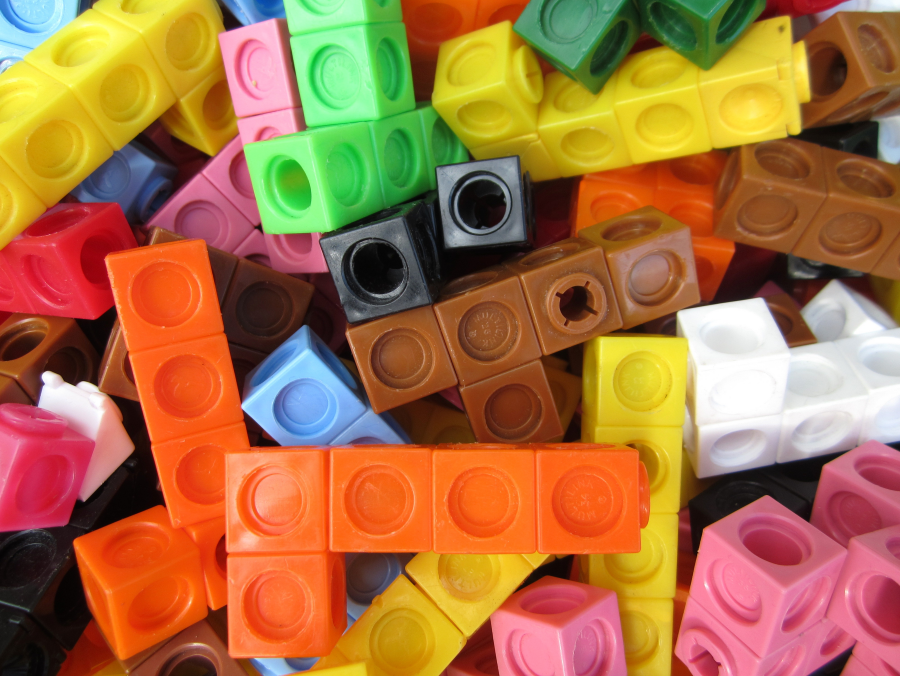
Hands-on linking cubes can help students model number relationships before writing symbols. Photo: Annielogue / Wikimedia Commons, CC BY-SA 3.0.

Saratoga Union: Eureka Math
The earlier drafts disagreed about Saratoga. The district’s current Math Resources page has a dedicated “Eureka Math Resources for Elementary School Families” section and calls Embarc a source of printables from “our math curriculum.” Based on that public evidence, Eureka Math is the correct published family-facing account.
What to confirm: Ask the teacher for the current module, lesson, and edition. That detail matters if you want home practice to use the same vocabulary or models.
Los Gatos Union: My Math Is Published, but the Source Is Old
Los Gatos Union’s published mathematics page names McGraw-Hill My Math for K–5. The page is substantially older than the other sources in this guide, and we did not find a newer family-facing adoption notice. Treat My Math as the district’s published reference—not as a guaranteed 2026–27 classroom title.
Before matching a workbook at home, ask: What program and unit is the class using now? Is the digital platform the same as the printed book? Are supplemental materials doing part of the core teaching?
How Campbell-Area Families Can Use This Information
- Match the representation, not just the chapter name. Bridges and Eureka may use different diagrams or language for related ideas.
- Ask for the current learning target. “Fractions” is broad; “compare unlike fractions using a model” is actionable.
- Check transfer. Change the numbers or context and see whether your child can still choose a starting strategy.
- Separate unfamiliar format from a true gap. A child may know the math but need help interpreting a new model—or may be copying a model without understanding it.
When a Textbook Answer Is Not Enough
A curriculum title tells you what the class is likely working through. It does not diagnose your child’s starting point. ThinkZone’s personalized K–G8 math program begins with an adaptive assessment, then uses the results to target the right skills, practice, and review.
For low-pressure practice between school days, see 7 Simple Ways to Build Strong Math Habits at Home. Campbell-area families can also explore the ThinkZone Campbell center and schedule a complimentary assessment when they want a clearer picture of strengths, gaps, and next steps.
Frequently Asked Questions
Do Campbell-area districts all use the same elementary math textbook?
No. The current public sources in this guide show Bridges in Campbell Union and Eureka Math in Moreland, Cambrian, and Saratoga. Los Gatos publishes My Math on an older page, so current classroom use should be confirmed.
Is Saratoga using Eureka Math?
Saratoga Union’s current elementary family resources point families to Eureka Math support and describe related printables as materials from the district’s math curriculum. Confirm the current module and edition with the teacher.
Should I buy the same workbook my child uses at school?
Only after you know the exact skill gap or goal. Matching the cover can create more practice without addressing the missing prerequisite, unfamiliar representation, or need for enrichment.
2026–27 Local Curriculum Reference
Use this table as a starting point, not as enrollment or placement advice. Open the linked district source and confirm the current program, edition, grade, unit, and supplements with the school.
| District | Published 2026–27 evidence | Parent action |
| Campbell Union | Bridges Mathematics | Confirm grade-level unit and supplements. |
| Moreland | Eureka Math, TK–5 | Confirm edition and current module. |
| Cambrian | Eureka Math, K–5 | Use the posted workbook only after identifying the target skill. |
| Saratoga Union | Eureka Math family resources | Confirm module, lesson, and edition. |
| Los Gatos Union | My Math on an older published page | Verify 2026–27 title before matching materials. |
Editorial Note on Sources
All external links in this draft point to official school-district or California Department of Education pages. Information that could not be verified on a current official page is identified as unconfirmed or historical rather than inferred.